
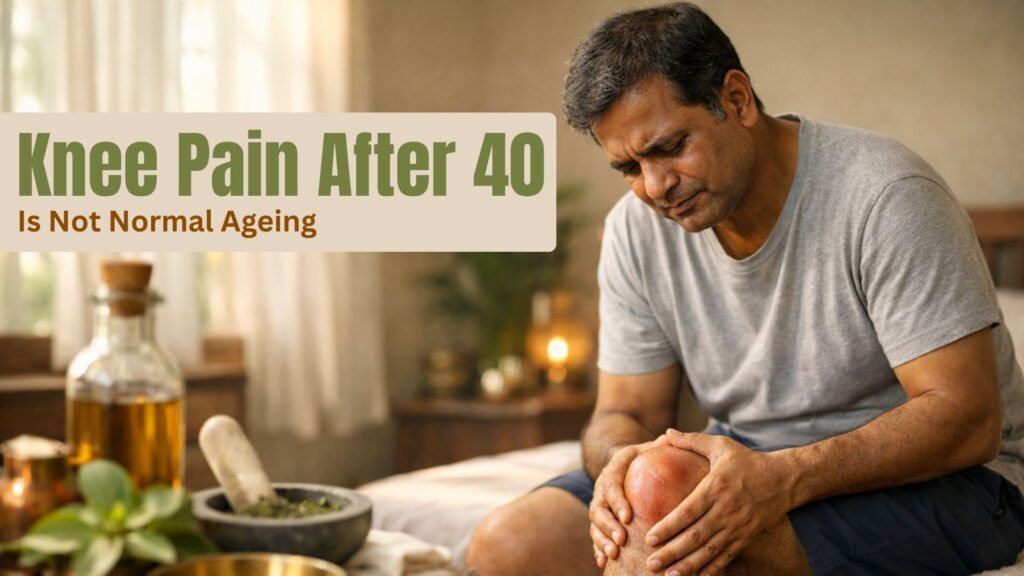
Knee pain after 40 is not simply ageing. It often signals joint degeneration, inflammation, or lifestyle imbalance. Ayurveda explains knee pain as a Vata imbalance affecting bones and joints. With proper diet, therapies, and strengthening routines, knee pain can be managed and even reversed naturally.
Introduction
Many people assume knee pain after 40 is normal. They ignore stiffness, cracking sounds, and mild swelling. Over time, that mild discomfort becomes chronic pain.
Today’s lifestyle makes it worse. Long sitting hours, lack of exercise, weight gain, and stress weaken joints faster. Professionals working at desks, homemakers managing daily chores, and active parents all experience early joint discomfort.
Pain is not a birthday gift after 40. It is the body’s signal. When understood early, knee pain can be corrected without aggressive treatments. Ayurveda focuses on prevention and restoring joint strength naturally.
Understanding Knee Pain in Simple Terms
Knee pain is discomfort around the knee joint. It can appear during walking, climbing stairs, or even sitting.
The knee joint is formed by:
- Thigh bone
- Shin bone
- Cartilage cushion
- Ligaments and tendons
Over time, cartilage thins. Lubrication reduces. Muscles weaken. This creates friction and inflammation.
In Ayurveda, this condition is linked to Vata imbalance, especially in the bones and joints. When Vata increases, dryness, cracking, and stiffness appear.
Why Knee Pain After 40 Is Not “Normal”
Ageing does not automatically cause pain. Pain happens due to:
- Poor circulation
- Weak digestion
- Nutritional gaps
- Excess dryness in joints
- Sedentary lifestyle
- Old untreated injuries
Healthy ageing is possible. Painful ageing is preventable.
If your knees hurt regularly, your body is asking for attention.
What Are the Common Causes of Knee Pain?
1. Osteoarthritis
Cartilage gradually wears down.
This causes stiffness and grinding sensation.
2. Excess Weight
Every extra kilo increases knee pressure.
More pressure means faster wear.
3. Weak Muscles
Weak thigh muscles cannot support the knee joint properly.
4. Inflammation
Swelling and warmth around the knee signal inflammatory changes.
5. Poor Diet
Low calcium, poor digestion, and junk food increase joint degeneration.
How Does Ayurveda View Knee Pain?
Ayurveda calls joint disorders Sandhivata.
It believes:
- Bones are governed by Vata
- Dryness increases joint friction
- Weak digestion creates toxins (Ama)
- Ama blocks joint nourishment
Treatment focuses on:
- Removing toxins
- Lubricating joints
- Strengthening bones
- Correcting digestion
It does not just suppress pain. It addresses the root imbalance.
Ayurvedic Approaches to Manage Knee Pain
1. Abhyanga (Medicated Oil Massage)
Warm herbal oils improve circulation.
They reduce stiffness and nourish tissues.
2. Janu Basti
Warm medicated oil is retained over the knee.
This deeply lubricates and reduces dryness.
3. Herbal Medicines
Common herbs include:
- Ashwagandha
- Shallaki
- Guggulu
- Dashamoola
These help reduce inflammation naturally.
4. Detox Therapies
Panchakarma removes accumulated toxins.
This improves joint nutrition.
What Lifestyle Changes Help Reduce Knee Pain?
Small daily corrections create big results.
- Walk 20–30 minutes daily
- Avoid long sitting hours
- Strengthen thigh muscles
- Maintain healthy weight
- Avoid cold, dry foods
- Drink warm water
Yoga asanas like:
- Tadasana
- Setu Bandhasana
- Gentle stretching
can improve joint flexibility.
Modern Treatment vs Ayurveda: What’s the Difference?
| Modern Approach | Ayurvedic Approach |
| Focus on pain relief | Focus on root cause |
| Painkillers reduce symptoms | Herbs restore balance |
| Surgery in severe cases | Strengthening and detox |
| Short-term control | Long-term joint health |
Both systems have value. Severe structural damage may require modern intervention. But early-stage knee pain responds well to natural correction.
When Should You Not Ignore Knee Pain?
Consult a professional if:
- Pain lasts more than two weeks
- Swelling persists
- You hear clicking with pain
- Knees feel unstable
- Morning stiffness lasts over 30 minutes
Early diagnosis prevents long-term damage.
How to Prevent Knee Pain After 40
Prevention is easier than treatment.
- Maintain digestive health
- Eat warm, nourishing food
- Avoid excessive fasting
- Practice regular mobility exercises
- Get adequate sleep
Joint care should start before pain begins.
Frequently Asked Questions (FAQs)
1. Is knee pain after 40 normal?
No. Mild stiffness can occur, but regular knee pain is not normal ageing. It indicates joint imbalance.
2. Can Ayurveda cure knee pain completely?
Ayurveda can significantly reduce knee pain, especially in early stages. It works best when started early.
3. How long does Ayurvedic treatment take for knee pain?
Improvement may begin in a few weeks. Long-term results require consistent lifestyle changes.
4. Is surgery necessary for knee pain?
Not always. Surgery is needed only in severe cartilage damage. Many cases improve with non-surgical care.
5. Which food is good for knee pain?
Warm, cooked foods, sesame oil, ghee, and calcium-rich ingredients support joint health.
6. Can exercise worsen knee pain?
Wrong exercises can worsen it. Gentle strengthening and supervised routines improve joint stability.
Conclusion
Knee pain after 40 is not a natural rule of life. It is a warning sign.
Ignoring early discomfort leads to long-term degeneration. Understanding the root cause makes a difference. Ayurveda offers a holistic path. It restores balance, nourishes joints, and strengthens the body from within.
If you are experiencing knee pain, start with simple corrections. Seek expert guidance early. Your joints can remain strong and flexible well beyond 40.