
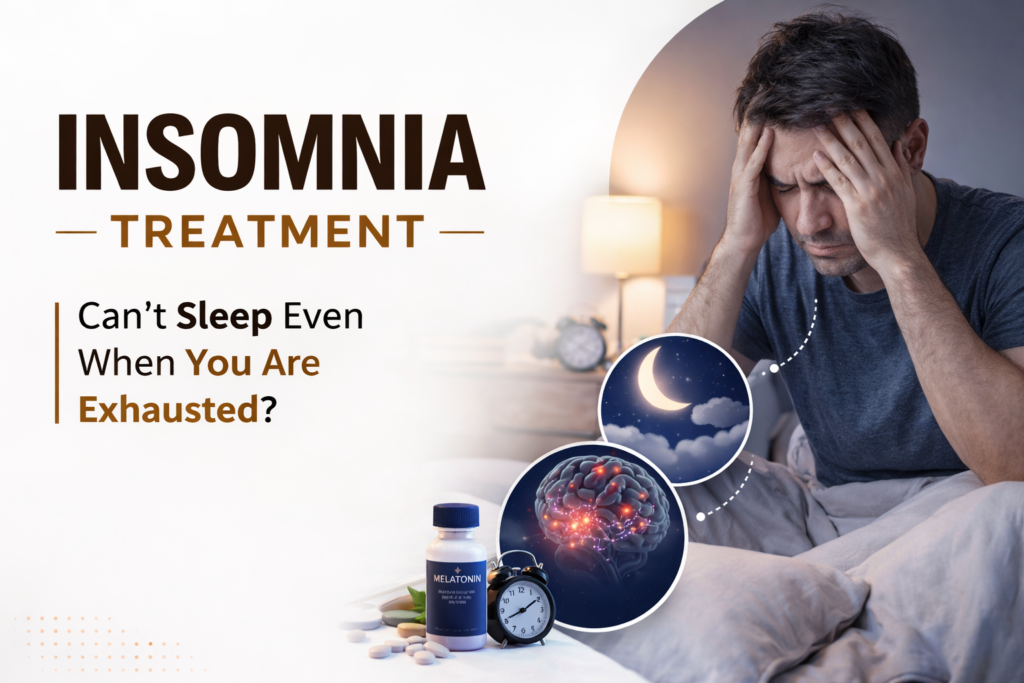
If you feel exhausted but still cannot sleep, your body may be tired but your mind is overstimulated. Effective insomnia treatment focuses on calming the nervous system, correcting sleep habits, and addressing root causes like stress, lifestyle imbalance, or hormonal disruption.
Introduction
Many people today say the same thing: “I am tired, but I just can’t sleep.” This problem is becoming common among students, professionals, business owners, and parents. Long screen time, work pressure, irregular meals, and constant mental stimulation disturb natural sleep cycles. Sleep is not just rest. It is repair. It supports memory, immunity, mood, and heart health. When sleep is disturbed regularly, it affects productivity, relationships, and overall well-being. Ignoring sleep problems can slowly lead to anxiety, fatigue, and lifestyle disorders. That is why understanding proper insomnia treatment is important before the condition becomes chronic.
What Is Insomnia?
Insomnia is a sleep disorder where a person:
- Finds it hard to fall asleep
- Wakes up frequently at night
- Wakes up too early
- Feels unrefreshed even after sleeping
It can be short-term (acute) or long-term (chronic). Insomnia is not only about sleep duration. It is about sleep quality.
Why Can’t You Sleep Even When You’re Exhausted?
1. Overactive Mind
You may be physically tired but mentally alert. Common triggers include:
- Stress and overthinking
- Work deadlines
- Emotional issues
- Social media and late-night scrolling
Your brain stays in “alert mode.”
2. Hormonal Imbalance
Sleep depends on melatonin. Poor sleep routine, artificial lights, and irregular timing disturb this hormone. This delays sleep onset.
3. Irregular Lifestyle
Late dinners, caffeine, alcohol, and irregular sleep timing confuse your internal clock. Your body does not know when to rest.
4. Anxiety and Subconscious Stress
Even if you feel calm, your nervous system may be activated. This keeps your body in fight-or-flight mode.
How Does Insomnia Affect Your Health?
Poor sleep impacts:
- Memory and focus
- Emotional stability
- Immunity
- Weight management
- Heart health
Long-term sleep issues increase the risk of lifestyle diseases. Prevention matters.
Types of Insomnia Treatment
There is no one-size-fits-all solution. Treatment depends on the root cause.
1. Lifestyle Correction
This is the first step.
- Fixed sleep and wake time
- Avoid screens 60 minutes before bed
- Light dinner
- Reduce caffeine
- Dark and cool bedroom
Small changes create big impact.
2. Cognitive Behavioral Therapy (CBT-I)
CBT-I helps change negative thoughts around sleep. It is useful for people who worry about not sleeping.
3. Medication
Doctors may prescribe sleeping pills for short-term use. However, they do not solve the root cause and may cause dependency.
4. Ayurvedic Insomnia Treatment
Ayurveda views insomnia as a nervous system imbalance.
It focuses on calming the mind and restoring natural rhythm.
At LifeTree: Ayurvedha and Wellness Pvt Ltd, insomnia treatment follows a holistic approach that includes:
- Herbal support
- Nervous system calming therapies
- Oil treatments for relaxation
- Breathing and meditation practices
- Lifestyle guidance
The goal is to correct the imbalance, not suppress symptoms.
How Ayurveda Understands Insomnia
According to Ayurveda, excess Vata dosha causes disturbed sleep.
Symptoms include:
- Light sleep
- Restlessness
- Anxiety
- Dryness
- Cold sensations
Treatment focuses on grounding and calming the system.
Natural Practices That Improve Sleep
Here are simple, effective practices:
Night Routine Reset
- Warm bath before bed
- Gentle stretching
- Oil massage for feet
- Early dinner
Breath and Mind Practices
- Deep breathing
- Alternate nostril breathing
- Guided relaxation
These reduce mental chatter.
Herbal Support
Traditional herbs like:
- Ashwagandha
- Brahmi
- Jatamansi
These support nervous system balance when prescribed properly.
When Should You Seek Professional Help?
You should consult a specialist if:
- Insomnia lasts more than 2 weeks
- You depend on sleeping pills
- Sleep affects your daily functioning
- You experience anxiety or panic
Early intervention prevents chronic sleep disorders.
Lifestyle Correction vs Medication vs Ayurveda
Approach | Focus | Long-Term Benefit | Root Cause Addressed |
Medication | Immediate sleep | Low | No |
Lifestyle Change | Habit correction | High | Partially |
Ayurveda | Nervous system balance | Very High | Yes |
Each method has value. However, root-cause treatment offers lasting results.
Frequently Asked Questions (FAQs)
What is the best insomnia treatment?
The best treatment depends on the cause. Lifestyle correction and stress management are essential. Holistic methods often provide long-term relief.
Why am I tired but unable to sleep?
Your body may be tired, but your mind is overstimulated. Stress and screen exposure delay sleep hormones.
Is insomnia dangerous?
Occasional insomnia is common. Chronic insomnia can increase the risk of anxiety, heart issues, and fatigue-related disorders.
Can Ayurveda cure insomnia naturally?
Ayurveda focuses on balancing the nervous system and correcting lifestyle. It aims to treat the root cause rather than suppress symptoms.
How long does insomnia treatment take?
Mild cases improve in 2–4 weeks with lifestyle correction. Chronic cases may require structured therapy and guidance.
Should I take sleeping pills regularly?
Sleeping pills may help short-term. Long-term use should only be under medical supervision.
Conclusion
If you cannot sleep even when exhausted, your body is asking for balance. Insomnia is not just a sleep issue. It is a nervous system signal. Correcting habits, calming the mind, and addressing root causes can restore natural sleep rhythm. Instead of ignoring the problem or relying only on quick fixes, consider a holistic approach. Understanding your sleep pattern is the first step toward lasting recovery.