
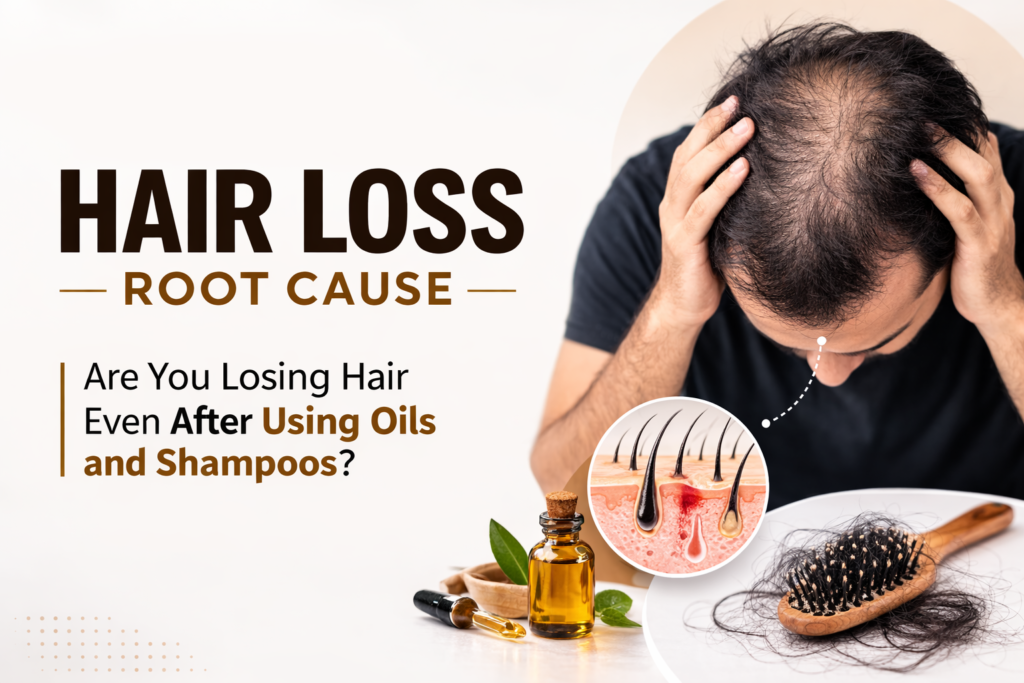
Hair loss continues despite oils and shampoos because the real cause is usually internal. Stress, hormonal imbalance, poor nutrition, weak digestion, or medical conditions often trigger hair fall. Surface treatments help the scalp, but they do not correct the root imbalance inside the body.
Introduction
Hair loss has become a growing concern among young adults and middle-aged individuals alike. Many people invest in expensive oils, shampoos, and serums. Yet the hair fall does not stop. This creates frustration. Modern lifestyles include stress, irregular sleep, processed food, and long working hours. These factors silently weaken the body. Hair is often the first visible sign of internal imbalance. Instead of constantly changing products, it is important to understand what your body is signaling. When the root cause is identified and corrected, hair health improves naturally. Let us explore why this happens.
What Is the Real Root Cause of Hair Loss?
Hair loss is rarely just a scalp problem. It is often a systemic issue. Hair grows in a cycle that includes growth, rest, and shedding phases. This cycle depends on:
- Proper nutrition
- Balanced hormones
- Healthy digestion
- Good blood circulation
- Low stress levels
When one or more of these are disturbed, hair enters the shedding phase early.
Oils and shampoos cannot regulate hormones or improve iron levels. That is why hair loss continues despite regular care.
Why Oils and Shampoos Alone Do Not Work
1. They Work Only on the Surface
Oils moisturize the scalp.Shampoos clean dirt and excess oil.
But hair grows from follicles deep under the skin. Internal weakness cannot be corrected externally.
2. Nutritional Deficiencies
Low levels of:
- Iron
- Vitamin D
- Vitamin B12
- Protein
can weaken hair roots. Without correcting deficiencies, hair continues to thin.
3. Chronic Stress
Stress increases cortisol levels.High cortisol disrupts the hair growth cycle.
This leads to a condition called telogen effluvium, where hair sheds excessively.
4. Hormonal Imbalance
Conditions such as:
- Thyroid disorders
- PCOS
- Post-pregnancy hormonal shifts
directly affect hair density. No cosmetic product can fix hormonal imbalance.
How the Body Influences Hair Health
Hair reflects internal health.
If digestion is weak, nutrient absorption reduces.
If sleep is poor, hormone repair slows down.
If stress is high, inflammation increases.
All these affect hair follicles.
Holistic systems of medicine view hair loss as a sign of imbalance. Instead of focusing only on the scalp, they aim to restore:
- Digestive strength
- Stress management
- Hormonal balance
- Blood quality
Centres like LifeTree: Ayurvedha and wellness Pvt Ltd focus on this root-based approach rather than only cosmetic treatment.
Common Triggers of Hair Loss Today
Lifestyle Triggers
- Late-night sleep
- Skipping meals
- Excess caffeine
- Sedentary work
Medical Triggers
- Thyroid imbalance
- PCOS
Anemia - Post-illness weakness
Environmental Triggers
- Chemical-heavy products
- Hard water
- Pollution
Understanding your trigger is the first step toward recovery.
Is It Normal Hair Shedding or Hair Loss?
Losing 50–100 strands daily is normal.
It may be a concern if:
- Hair fall exceeds 100 strands daily
- You notice widening of the parting line
- Hairline starts receding
- Overall hair thickness reduces
Early identification helps prevent long-term thinning.
Treatment Options: What Should You Choose?
Cosmetic Care
- Shampoos
- Conditioners
- Serums
Good for maintenance.
Not sufficient for root correction.
Medical Treatment
- Supplements
- Prescription medication
- PRP therapy
Effective for diagnosed conditions.
Needs professional supervision.
Holistic Approach
- Diet correction
- Herbal support
- Stress reduction
- Detox therapies
- Oil therapies
Focuses on long-term balance and root strengthening.
The right approach depends on your specific cause.
How to Identify Your Root Cause
Follow these steps:
- Get blood tests for iron, vitamin D, and thyroid.
- Evaluate your sleep quality.
- Assess stress levels honestly.
- Review your diet.
- Track hormonal symptoms.
Avoid randomly switching products. Diagnosis comes first.
Frequently Asked Questions (FAQ)
What is the main reason for hair loss?
The main reason varies. It can be stress, hormonal imbalance, nutritional deficiency, or genetics. Internal factors are often responsible.
Can oiling stop hair loss permanently?
No. Oiling improves scalp health but does not correct hormonal or nutritional imbalances.
How long does it take to control hair loss?
It usually takes 3–6 months after correcting the root cause to see noticeable improvement.
Does stress cause hair loss?
Yes. Chronic stress increases cortisol, which disrupts the hair growth cycle and causes shedding.
Should I take supplements for hair loss?
Supplements help only if you have a diagnosed deficiency. Always test before supplementing.
When should I consult a professional?
Consult a specialist if hair fall continues for more than three months or if visible thinning occurs.
Conclusion
Hair loss is often a message from your body. It signals imbalance, not just scalp dryness. Oils and shampoos support external care. But real improvement begins inside. Correct nutrition, balanced hormones, stress management, and healthy digestion are key. Instead of searching for the next product, focus on understanding your root cause. Once the internal imbalance is corrected, hair regains strength naturally. Your hair health depends on your overall well-being.